From sequences to a global open biodiversity record
2026-07-09
| Time (min) | |
|---|---|
| 00:00 | Welcome and housekeeping |
| 00:10 | Introduction to DNA-derived data |
| 00:40 | Dataset exercise introduction |
| 00:45 | Exercise: samples.xlsx (Event & eMoF table) |
| 00:55 | Exercise: seqtab.txt (Occurrence) |
| 01:05 | Exercise: taxonomy.txt (Occurrence) |
| 01:10 | Exercise: sequences (DNA-derived data) |
| 01:15 | Exercise: methods (DNA-derived data) |
| 01:30 | Q & A |
Environmental DNA (eDNA)
“Any DNA collected from an environmental sample without first isolating targeted organisms”
— Taberlet 2012
🌊🌱🍃
Most common eDNA data types you may encounter:
Environmental DNA Metabarcoding
Quantitative PCR (PCR)
Which one fits your data?
| # | Category | Example |
|---|---|---|
| 1 | DNA-derived occurrences | Metabarcoding (ASVs/OTUs assigned to taxa) |
| 2 | Enriched occurrences | Voucher specimen + barcoded |
| 3 | Targeted species detection | qPCR / ddPCR assays |
| 4 | Name references | Sequence in GenBank only |
| 5 | Metadata only | Dataset without sequences |
🔎 Use the GBIF decision tree to confirm your category
Barcoding + Meta
Barcoding = species ID via a genetic marker sequence
Meta = all together (all organisms at once)
Choosing the right barcode
Figure adapted from NatureMetrics and Gill et al. 2016 · Emilie Boulanger
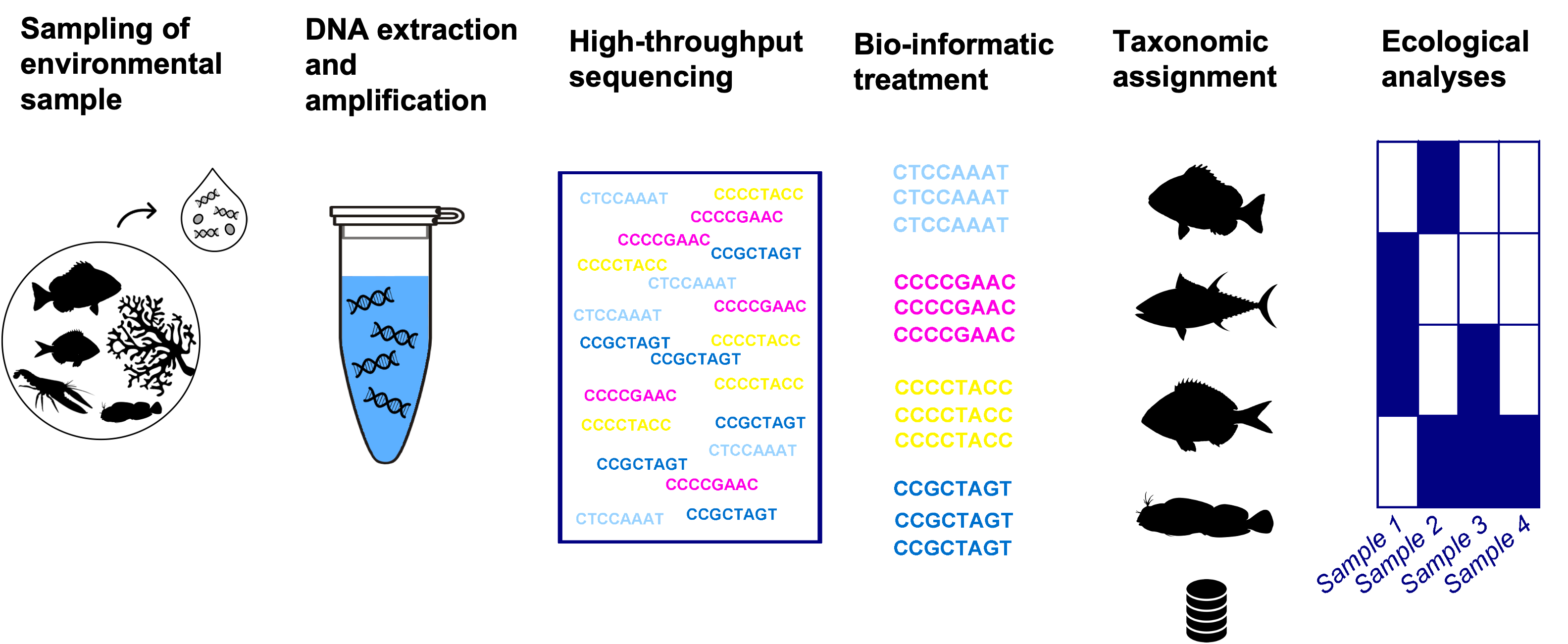
From field collection to taxonomy — what to capture at each step
⛵ Field Sampling
🧪 Biomarker / PCR
🧬 DNA Extraction
💻 Sequences & Taxonomy
Targeted species detection — additional fields vs metabarcoding · Category 3
⛵ Field Sampling
🧪 PCR Protocol
🧬 DNA Extraction
🎯 Target & Quantity
Category 3 — Targeted species detection · basisOfRecord = MaterialSample
eDNA captures what other methods miss
Shared eDNA data is powerful data
| Benefit | Why it matters |
|---|---|
| Open DOI | Citable in publications |
| Long-term archive | FAIR data |
| Global reach | OBIS + GBIF |
| Sequence search | Reuse & reanalysis |
Enormous potential…
…but NCBI alone is not enough
Special considerations
⚗️ Derived information — not a direct observation; extensive lab and bioinformatic processing
📚 Relies on reference databases — results depend on database completeness
❓ Large fraction of unknown sequences — no match in any database
📋 The DwC DNA Extension records how work was done, enabling future re-analysis
Two major eDNA data standards exist
OBIS + GBIF + ALA accept genetic data linked to spatial coordinates and time
🔜Developing landscape
Publishing DNA-derived data through biodiversity data platforms
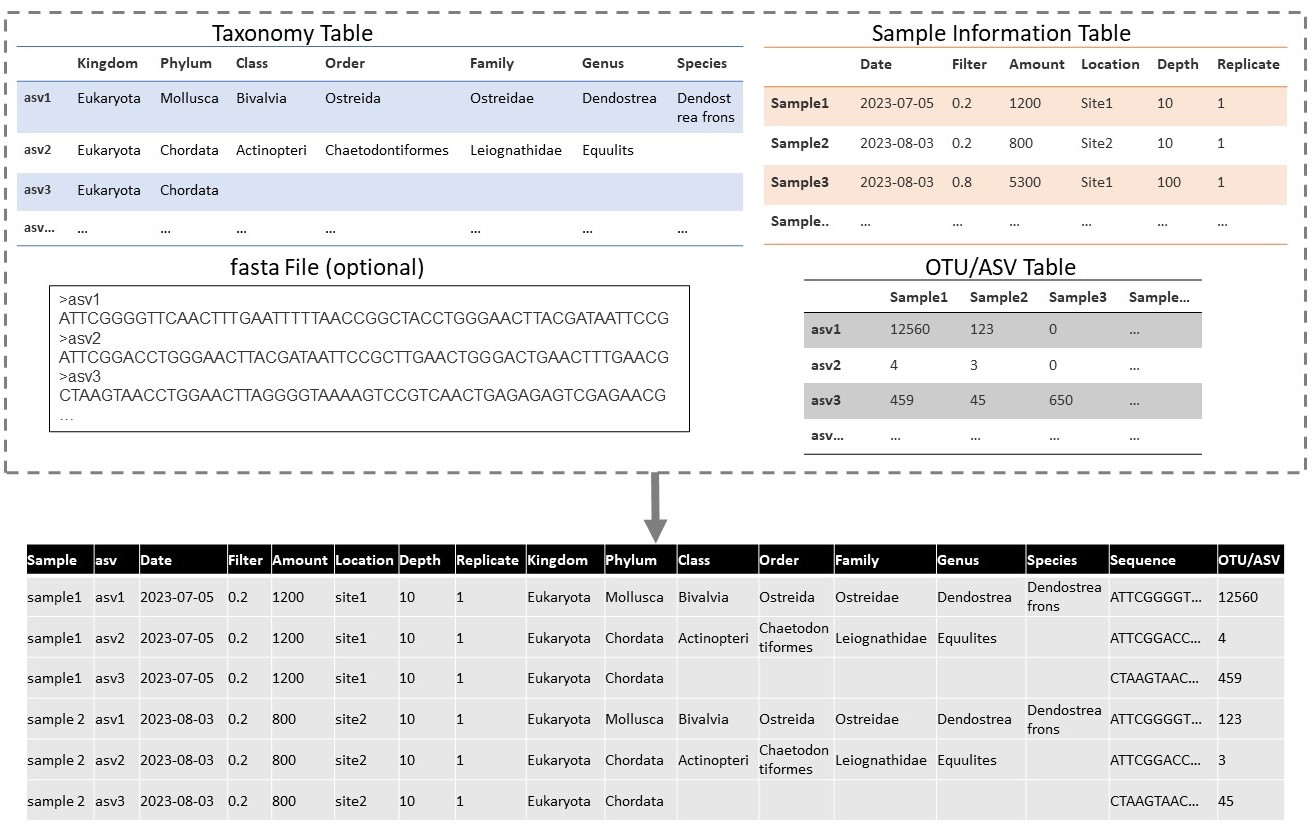
DNA data is more complex than a lat/lon + species name
Your typical metabarcoding outputs:
| File | Content |
|---|---|
| OTU/ASV table | Sequences × Samples (read counts) |
| Taxonomy table | Sequence [ID] → taxon assignment |
| Sample metadata | Location, date, method |
| FASTA file | Actual DNA sequences |
The transformation:
One row = one unique sequence in one sample = one occurrence record
Occurrence core table (mandatory fields)
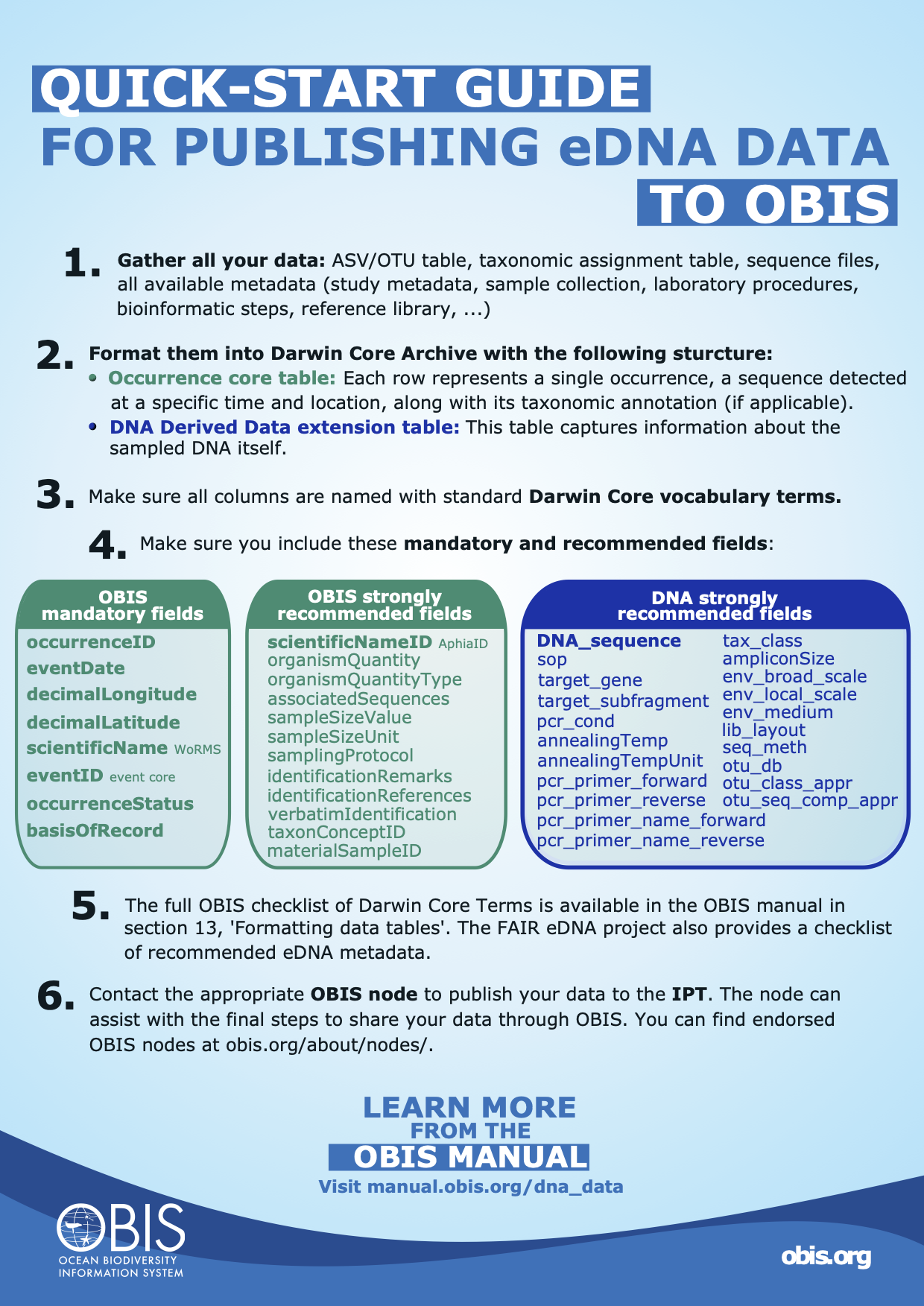
occurrenceID — unique, stable IDscientificName — WoRMSbasisOfRecord = “MaterialSample”eventDate, decimalLatitude, decimalLongitudeoccurrenceStatus = “present”Occurrence core table (strongly recommended fields)
scientificNameID (WoRMS AphiaID)organismQuantity (read count of sequence)associatedSequences (link to e.g. GenBank or ENA accession)organismQuantityType = “DNA sequence reads”sampleSizeValue (total read count in sample)sampleSizeUnit = “DNA sequence reads”samplingProtocol - (link to your SOP)Options for taxon matching:
No WoRMS match?
Use highest-rank taxon with a match (e.g. family or order). Keep the sequence — it can be re-identified later as reference databases improve.
Still no match?
Unknown sequences recorded as: scientificName = “Biota incertae sedis” scientificNameID = urn:lsid:marinespecies.org:taxname:12
DNA Extension (example key fields)
DNA_sequence — ASV/OTU sequencetarget_gene — e.g. “COI”, “18S rRNA”pcr_primer_name_forward — and reverseseq_meth — e.g. “Illumina MiSeq”otu_class_appr — e.g. “DADA2 v1.18”otu_db — reference databasesop — link to your protocol
https://manual.obis.org/dna_data.html#quick-start-guide
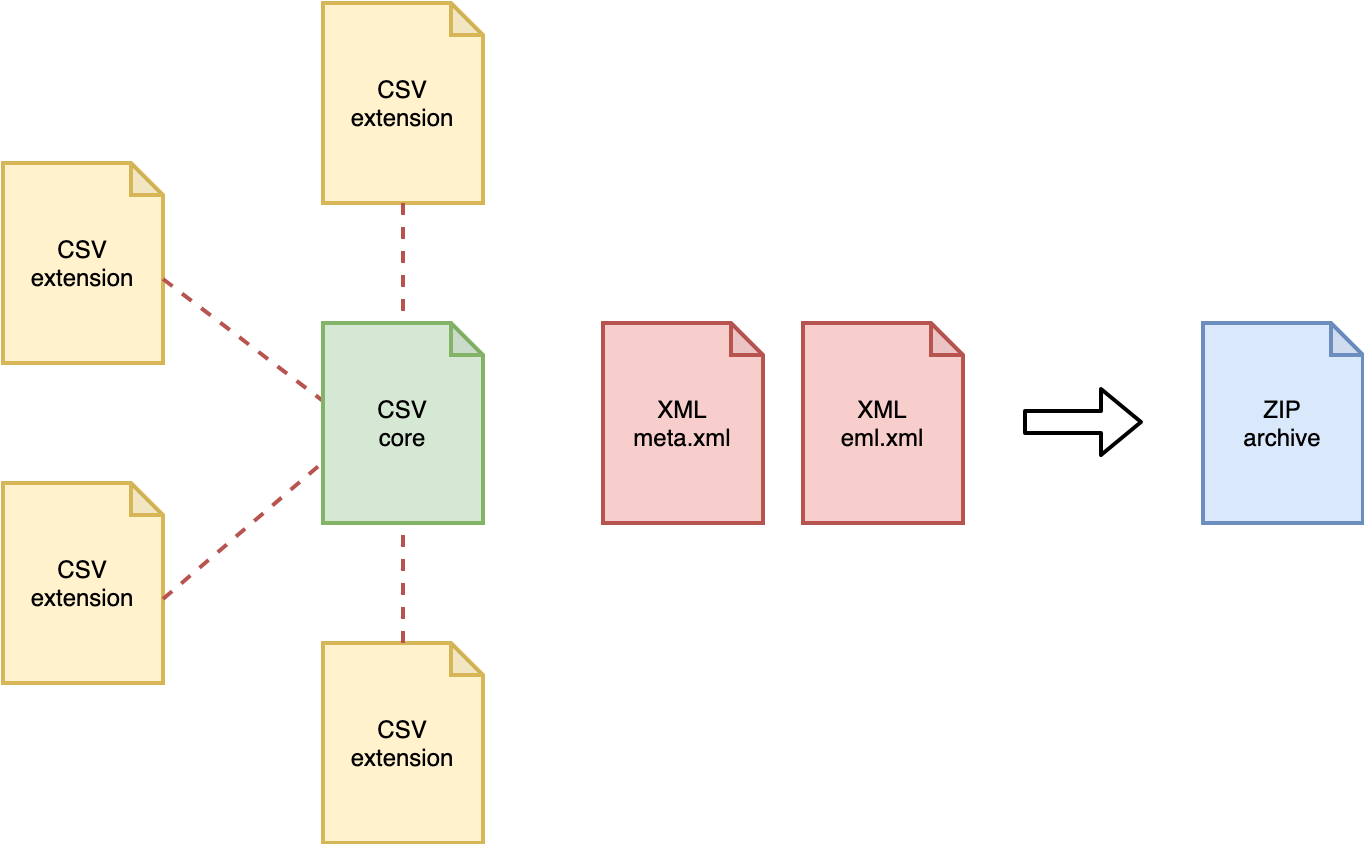
Option A — Occurrence Core
occurrence.csv
└── dna_derived.csv (linked via occurrenceID)
└── emof.csv (linked via occurrenceID)
Option B — Event Core (recommended for eDNA)
event.csv
└── occurrence.csv (linked via eventID)
└── dna_derived.csv (linked via occurrenceID)
└── emof.csv (linked via eventID or occurrenceID)
Why Event Core? Sample-level metadata (location, date, method) is recorded once per sampling event rather than repeated in every row.
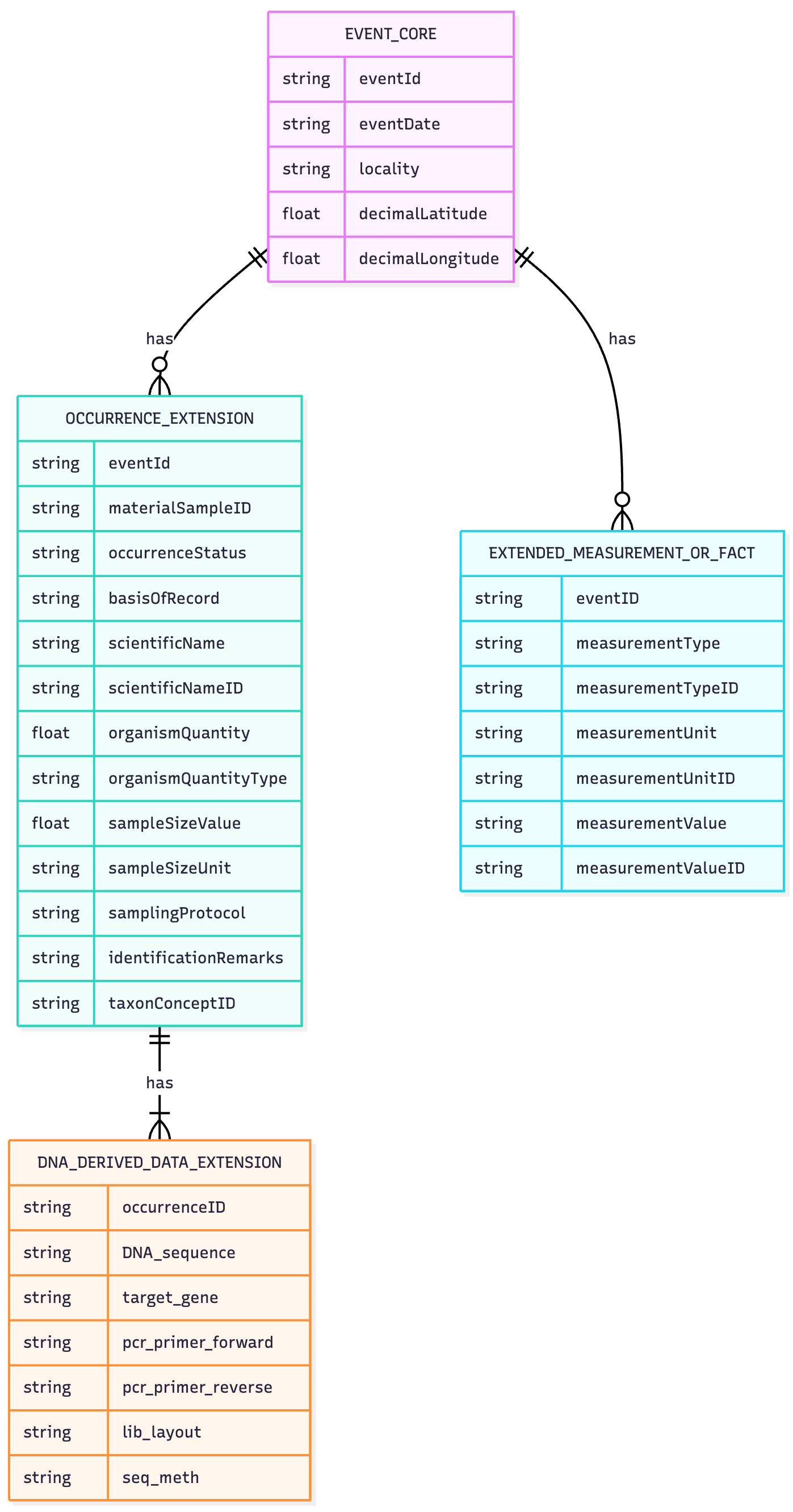
Event Core
eventIDeventDatedecimalLatitudedecimalLongitudeenv_mediumsamplingProtocol→ the where, when & how of collection
Occurrence Extension
occurrenceIDeventIDscientificNametaxonID (WoRMS)basisOfRecordoccurrenceStatus→ what organism was detected
DNA Derived Data Ext.
occurrenceIDDNA_sequencetarget_genepcr_primer_forwardpcr_primer_reverseseq_meth→ the molecular context
Tables linked by eventID and occurrenceID
Optional 4th table: eMoF for measurements and facts
measurementType, measurementValue, measurementUniteventIDs decreases duplication| eventID | occurrenceID | measurementType | measurementValue | measurementUnit | |
|---|---|---|---|---|---|
| YEARsite1samp1 | temperature | 25 | C |
| measurementTypeID | measurementUnitID | |
|---|---|---|
| http://vocab.nerc.ac.uk/collection/P01/current/TEMPPR01/ | http://vocab.nerc.ac.uk/collection/P06/current/UPAA/ |
Identifiers for each eMoF column
→ Facilitates data understanding
→ Enables data aggregation
→ Decreases misuse potential
What should vocabulary terms capture? 
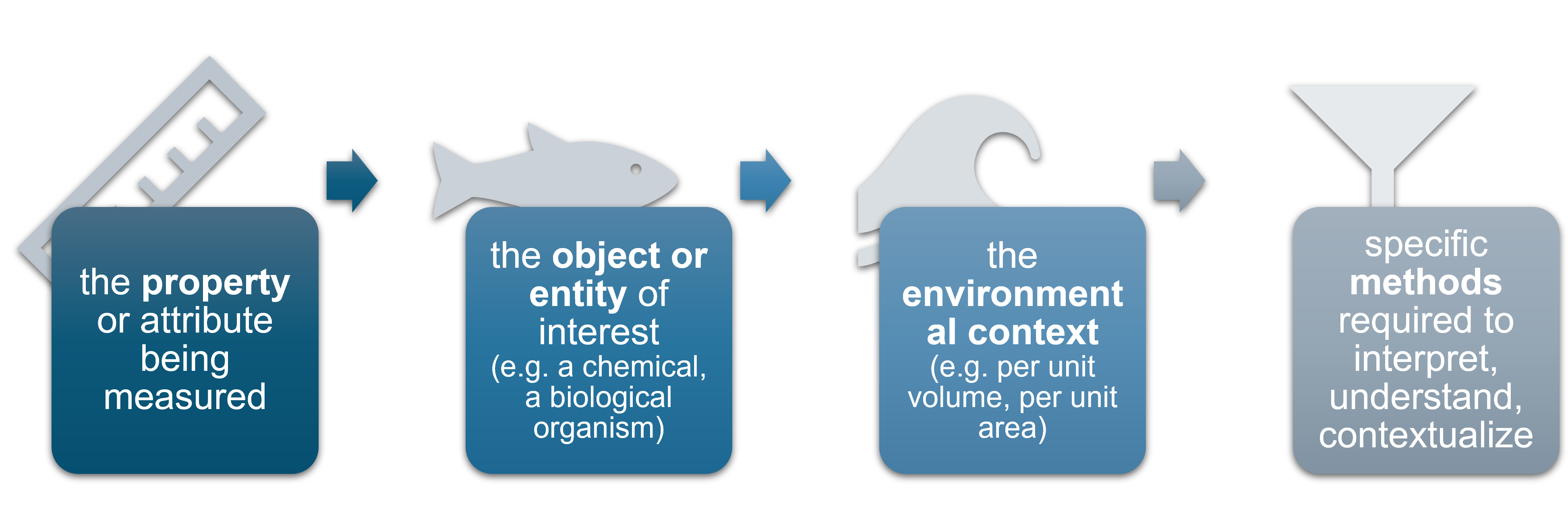
OBIS recommends using NERC vocabulary terms

GBIF Metabarcoding Data Toolkit
Automates DwC mapping from bioinformatic outputs
gbif.org/tools/mdt
robis (R package)
Query OBIS; retrieve DNA records with unnest_extension()
github.com/iobis/robis
obistools (R package)
Validation, QC, WoRMS matching, archive structure checks
github.com/iobis/obistools
OBIS Sequence Search
BLAST-search sequences already in OBIS (prototype)
sequence.obis.org
A newer tool to simplify the workflow
🔗 Available at: mdt.gbif.org
Note
Still under active development — check the GBIF documentation for the latest capabilities. Currently not possible to use the event core structure
🔧 OBIS is developing a data management platform for DNA data including:
To be offered to OBIS nodes to support local eDNA projects!
🚧
Real eDNA datasets already published:
How to find eDNA data in OBIS:
Species Distribution Modeling
Biodiversity Assessments
MPA Baseline Studies
Global Meta-analyses
| Resource | Link |
|---|---|
| OBIS Manual (DNA chapter) | manual.obis.org/dna_data.html |
| OBIS DNA training slides (this presentation!) | github.com/iobis/obis_edna_slides_node_training |
| GBIF DNA publishing guide | doi.org/10.35035/DOC-VF1A-NR22 |
| OBON 2024 DNA training | github.com/iobis/obon-2024-dna-training |
| IOOS Bio Mobilization Workshop | ioos.github.io/bio_mobilization_workshop |
| GBIF-NA DNA Publishing Workshop | sunray1.github.io/2025-05-09-GBIF-NA-DNAPublishing |
| OBIS helpdesk | helpdesk@obis.org |
Three steps to publish your eDNA data:
Format — Darwin Core + DNA Derived Data Extension
Long format: one row = one sequence per sample
Document — Complete EML metadata
Primers, methods, bioinformatics pipeline, license
Publish — Through your OBIS node IPT
Get a DOI. Be cited. Join the global record.
Start here → manual.obis.org/dna_data.html
eDNA captures biodiversity no other method can.
Publishing it in OBIS makes it
reusable, citable, and permanent.
© 2026 License: CC BY-NC 4.0